Chemistry, process and intelligence
for every gypsum board line.
A working reference for the four additive families that decide a plasterboard line — retarders, dispersants, foaming agents, starches — together with the process pages, patent record, calculators and commissioning framework a plant engineer actually consults on shift.
- 01 Specialty additives + on-site formulation
- 02 Commissioning & ramp-up to nameplate
- 03 Optimization across 14 plant pillars
- 04 Plant toolkit — live process calculators
- 05 Patent intelligence with diagrams
- 06 Weekly intel digest, every Monday
Every technical claim on this site links to a public primary source — patent, standard or peer-reviewed paper. Content still being audited is removed, not paraphrased.
Verified patent record →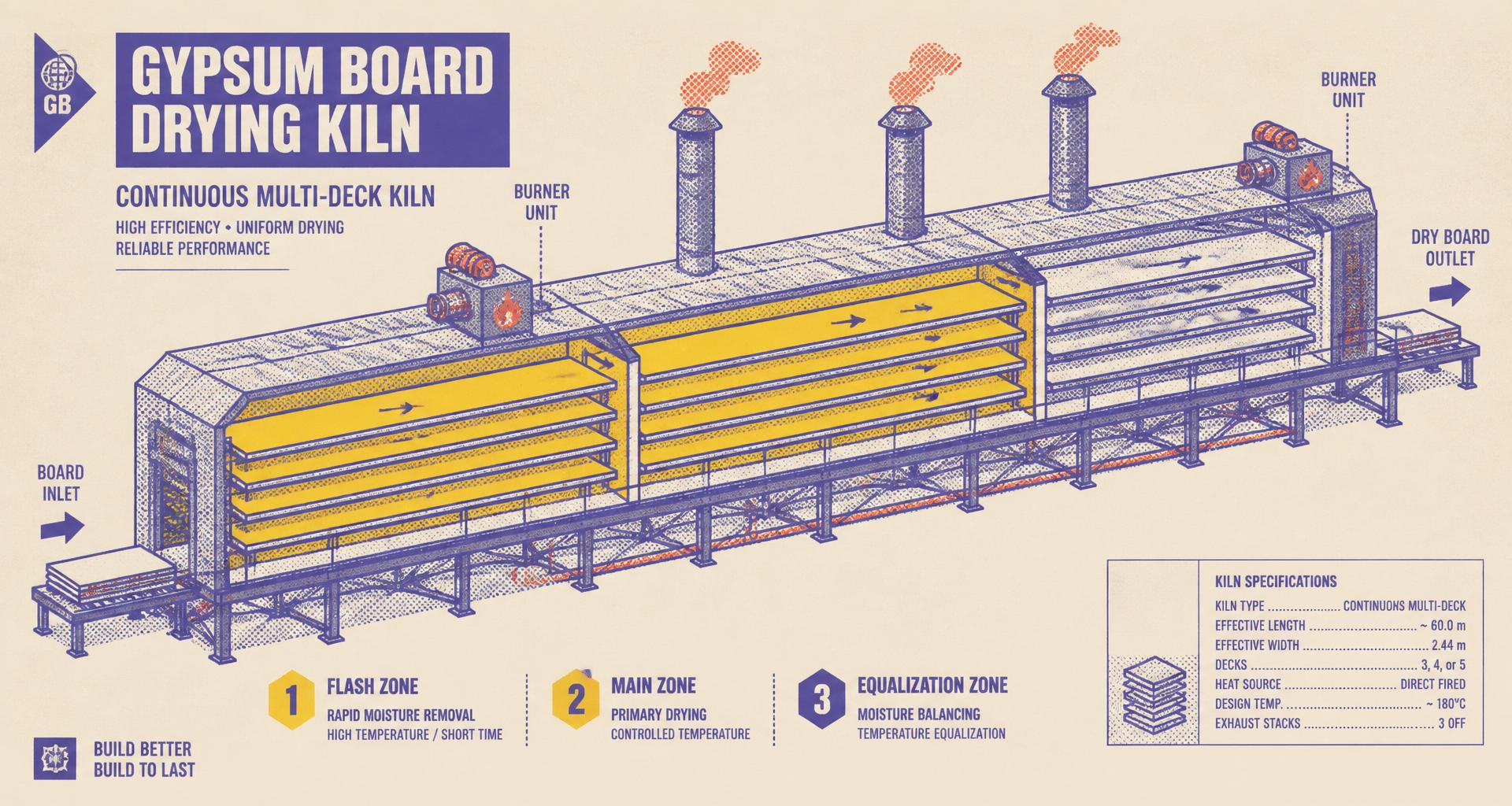
Four lines. One process logic.
Set Retarders & Accelerators
Tune the hydration window between hemihydrate slurry and the cut-off knife.
Dispersants & Water Reducers
Reduce slurry water demand and, with it, the energy the kiln has to evaporate.
Foaming Agents & Density Modifiers
Engineered foam for lightweight, dimensionally stable board cores.
Starches, Binders & Paper Bond
Hold the paper-to-core bond through the kiln and through decades of service.

The patents that quietly run your plant.
UltraLight, Habito, DensGlass, Type X. Six families dissected with annotated diagrams, claim-by-claim readings, and the plant implications most legal summaries miss.
Four working calculators.
Retarder dose vs water hardness. Foam draw vs target density. BHP to stucco. PCE dose vs W/S. Empirical, first-order, fast — bookmarkable.
 Schematic illustration · not a photograph
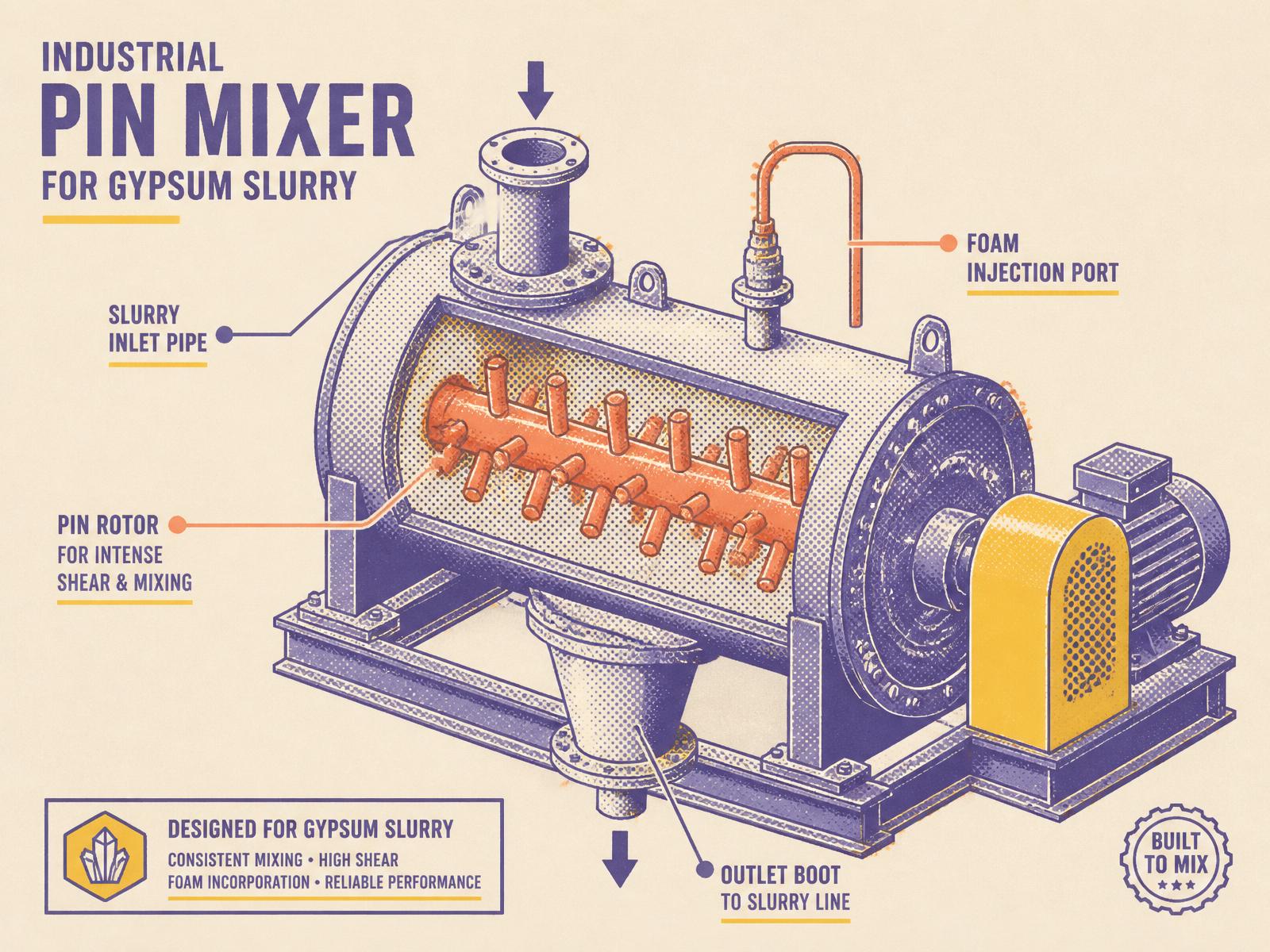
Where chemistry meets the conveyor.
Annotated production diagram from slurry to bundler with chemical injection points.
From first board to nameplate.
A four-phase program for greenfield startups and brownfield optimization.
14 pillars. One operating system.
Sales, QA, sourcing, sustainability, finance, R&D — orchestrated for plant operators.
A trade journal that happens to sell additives.
Foam Collapse: A Root-Cause Checklist for Plant Engineers
Twelve questions to ask before you call your supplier.
The Pin Mixer: Geometry and Foam Incorporation
Why two physically identical mixers produce different boards.
Why Your Set is Drifting: Water Hardness, Stucco Age, Accelerator Mill
A drifting setting time is almost never a single cause. It is usually three small ones.
Reading the Saint-Gobain Lightweight Board Patent Family
Foam stability, core density and what EP2090559 actually claims when you strip the legal language.
Bench, then line — never the other way around.
Every plant is a different combination of stucco source, process water, mixer geometry and kiln profile. A working recipe cannot be copied from a case study. The first engagement is always a bench-trial phase against your actual stucco and water, followed by a reduced-speed line trial and a full-speed qualification. We publish the framework, not fabricated case metrics — real client outcomes will only appear here with signed consent.
Read the commissioning framework →