Fire-Resistant Gypsum Panel with Enhanced High-Temperature Core Integrity
Defines a glass-fiber and unexpanded-vermiculite loading that holds the core together after both bound-water dehydrations.
- Assignee
- United States Gypsum (USG)
- Jurisdiction
- United States
- Filed
- 2009-02-25
- Published
- 2012-12-04
- Status
- Granted
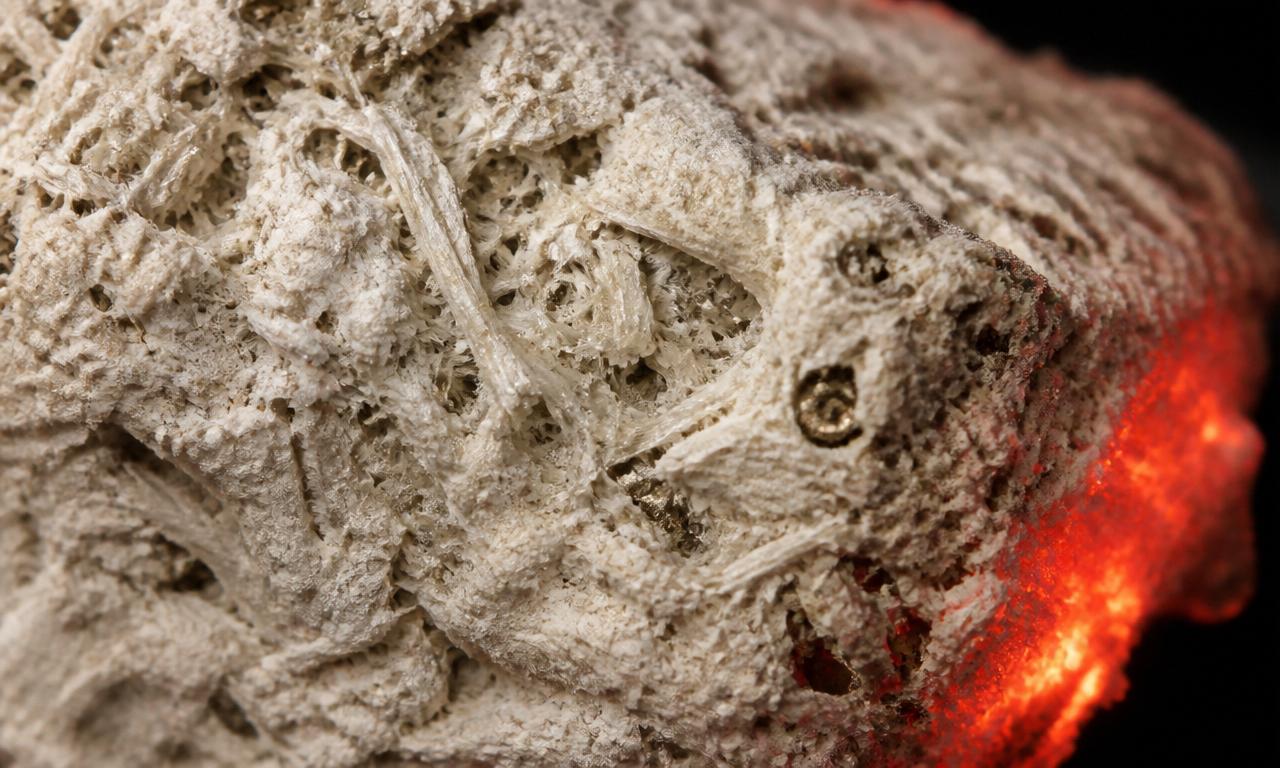
Provides a fire-resistant gypsum panel containing chopped E-glass fiber sized for slurry compatibility and unexpanded vermiculite whose expansion is timed to occur during the high-temperature exposure rather than during manufacture, maintaining structural integrity through the second dehydration and meeting ASTM E119 / UL 263 hour ratings.
A Type X core dehydrates twice during fire exposure. The first dehydration absorbs energy; the second leaves a porous calcium sulfate skeleton that must not crumble. The fiber-and-vermiculite system in this family is what keeps the skeleton standing.
- Claim 1
Chopped fiber length, diameter and silane-sizing window for slurry compatibility.
- Claim 2
Vermiculite particle-size and grade selection such that thermal expansion occurs at the relevant fire-test temperature, not during the board kiln.
- Claim 3
Loading ratios required to maintain integrity through the time-temperature curve of E119 / UL 263.
Run your kiln too hot during commissioning and you can pre-expand the vermiculite, burning fire-rating headroom before any board leaves the yard. Fiber sizing chemistry must match your slurry pH — unsized fiber rolls and creates surface defects. Both errors are silent until the certifying test.
- · USPTO Patent Full-Text Database, US 8,323,785 B2
- · ASTM E119 / UL 263 fire-test protocols